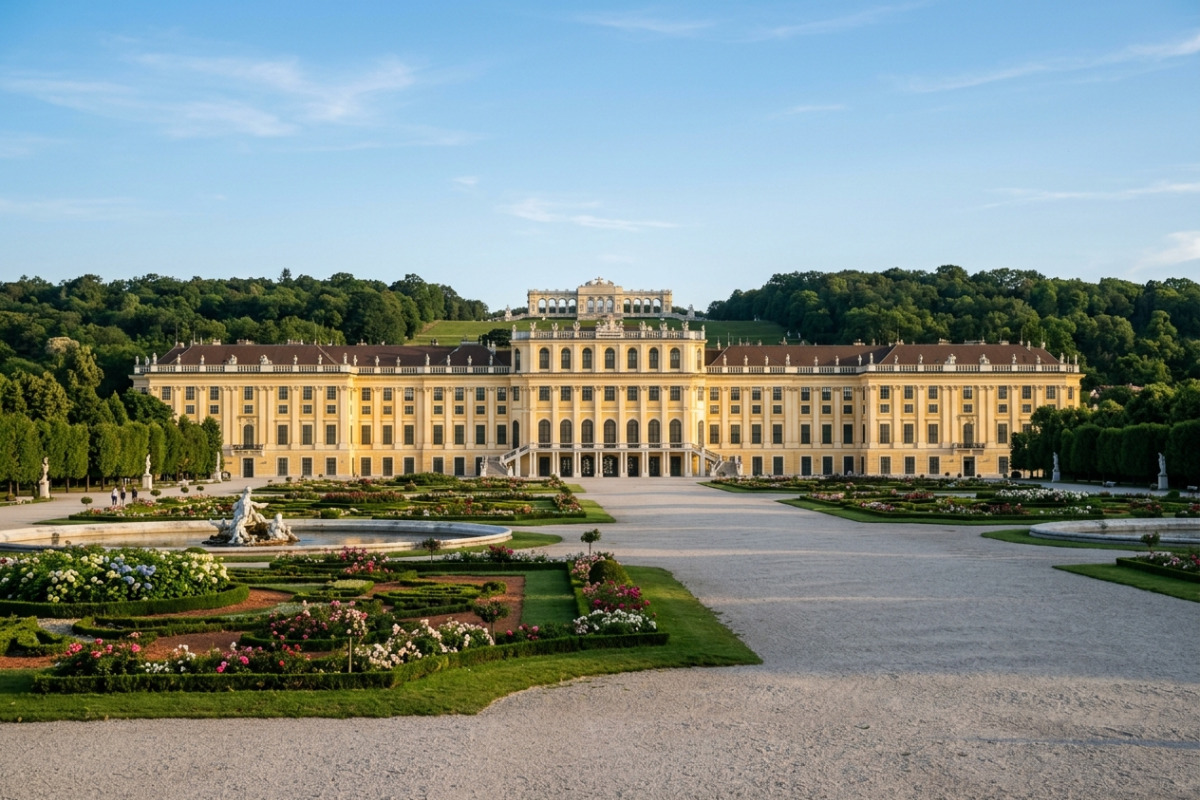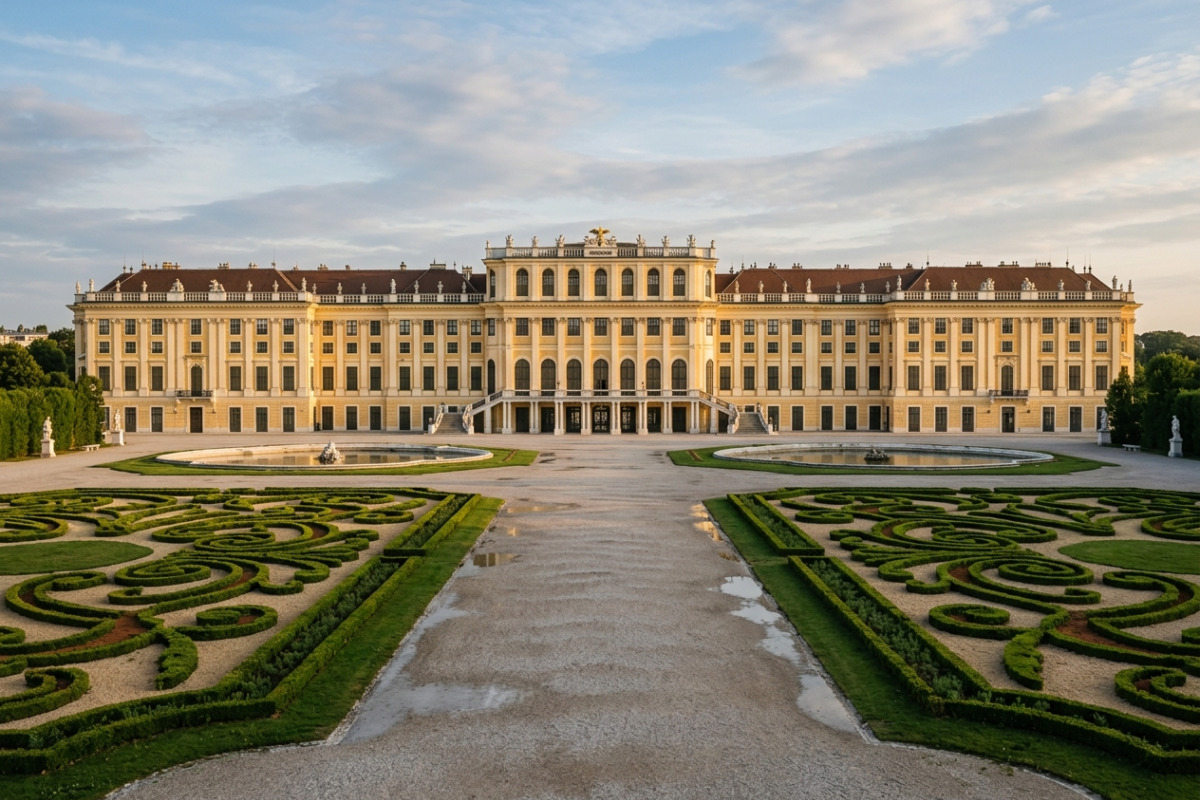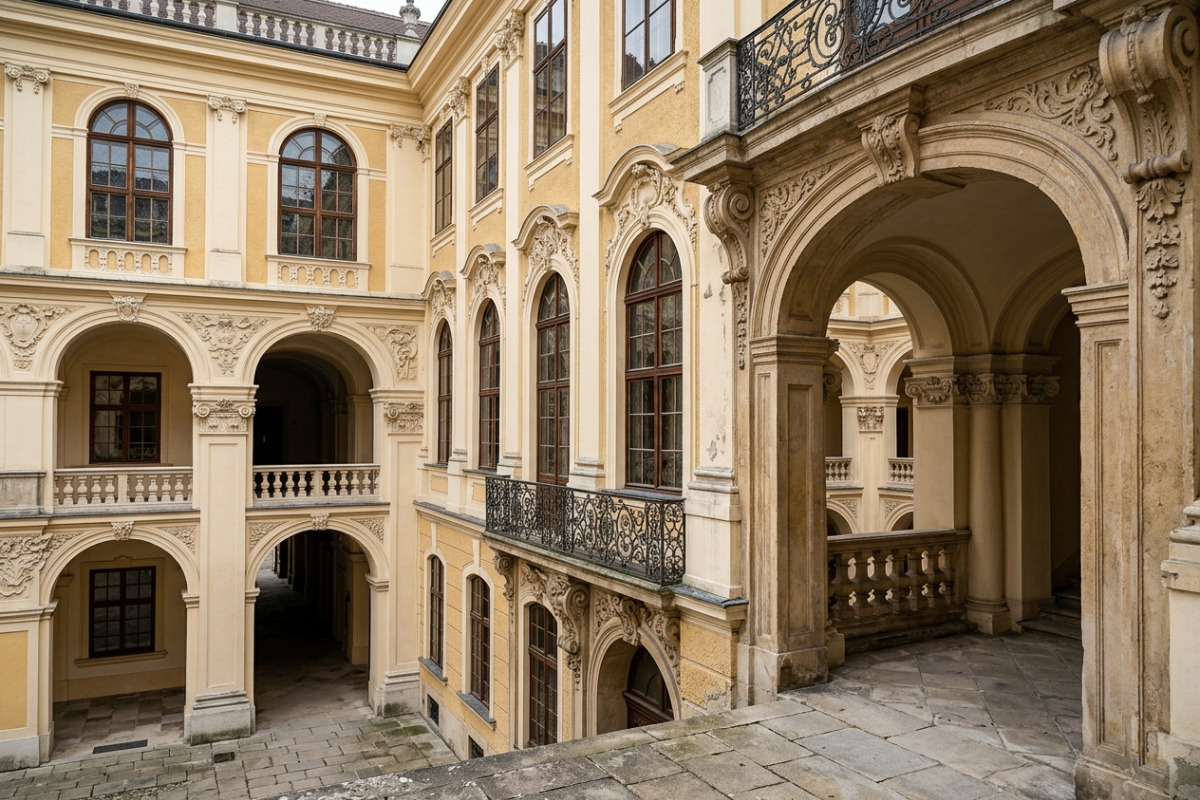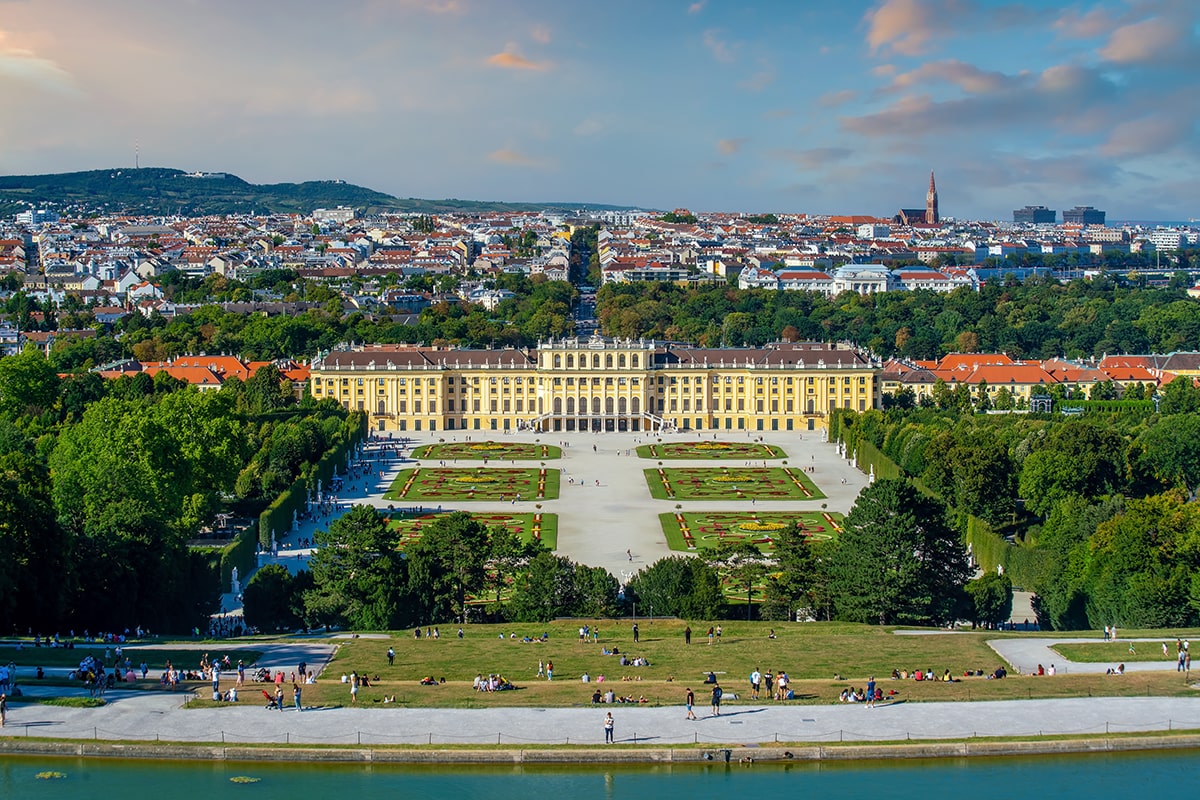
Schönbrunn Palace, situated in Vienna, Austria, is a stunning example of Baroque architecture. Constructed in the 18th century, it served as a summer residence for the Habsburg rulers. This magnificent palace not only reflects the grandeur of this era but also showcases the intricate details of Baroque artistry.
The Historical Origins
The origins of Schönbrunn trace back to the 16th century, when the site served as an imperial hunting ground and housed a small residence. Over the following centuries, it evolved into a key symbol of Habsburg power. In 1696, Emperor Leopold I commissioned architect Johann Bernhard Fischer von Erlach to redesign the estate as a Baroque palace. His ambitious vision sought to blend architecture and landscape into a unified, harmonious whole.
The Baroque Architectural Style
Baroque architecture is characterized by its dramatic use of light and shadow, grandeur, and elaborate decorations. This style sought to evoke emotion and create an awe-inspiring atmosphere. Key elements of Baroque architecture include:
- Opulent facades with intricate carvings
- Large-scale ceiling frescoes
- Symmetrical layouts
- Grand staircases
- Richly decorated interiors
Schönbrunn embodies these characteristics with its ornate façade, expansive gardens, and exquisite interior designs.
Construction and Design
The construction of Schönbrunn Palace began in 1696 with Johann Bernhard Fischer von Erlach’s ambitious Baroque design. Work continued over several decades, with major expansions and interior redesigns carried out under Empress Maria Theresa. Numerous architects, decorators, and craftsmen contributed to the palace’s development, particularly during the mid-18th century when Nikolaus Pacassi and a team of court artists shaped much of the appearance seen today. The attention to detail in the construction process was paramount.
An Overview of the Construction Timeline
| Year | Event |
| 1696 | Construction begins under Fischer von Erlach |
| 1700-1716 | Early phases completed; original design scaled back |
| 1740s–1750s | Major redesign and expansion under Maria Theresa |
| 1770s | Completion of key landscape features (e.g., Gloriette, gardens refined) |
This timeline highlights the commitment to perfection that was essential for such an ambitious project. Each phase required skilled labor and artistic creativity, resulting in a palace that stands as a testament to Baroque excellence.
Significance of Schönbrunn Palace
Schönbrunn Palace has significant historical and cultural importance. It not only served as a royal residence but also as a centre of political power during the Habsburg dynasty. The palace is now a UNESCO World Heritage site and attracts millions of visitors annually, showcasing its enduring legacy. Its gardens, designed in the French style, further enhance the beauty of the palace and provide a picturesque setting for leisure and cultural events.
Key Features of Schönbrunn Palace
- 1,441 rooms, each uniquely designed
- A vast park with ornamental gardens
- The world’s oldest zoo still in operation, established in 1752
- Beautifully decorated state rooms and private apartments
Today, Schönbrunn is not merely a relic of the past; it continues to be a symbol of Austria's rich cultural history.
Conclusion
In summary, Schönbrunn Palace is a remarkable example of Baroque architecture that showcases the artistry and cultural significance of its time. Its construction reflects the grandeur of the Habsburg dynasty and offers a glimpse into the opulent lifestyle of Austrian royalty. Visitors to Schönbrunn not only appreciate its aesthetic beauty but also the historical narratives that continue to unfold within its walls.